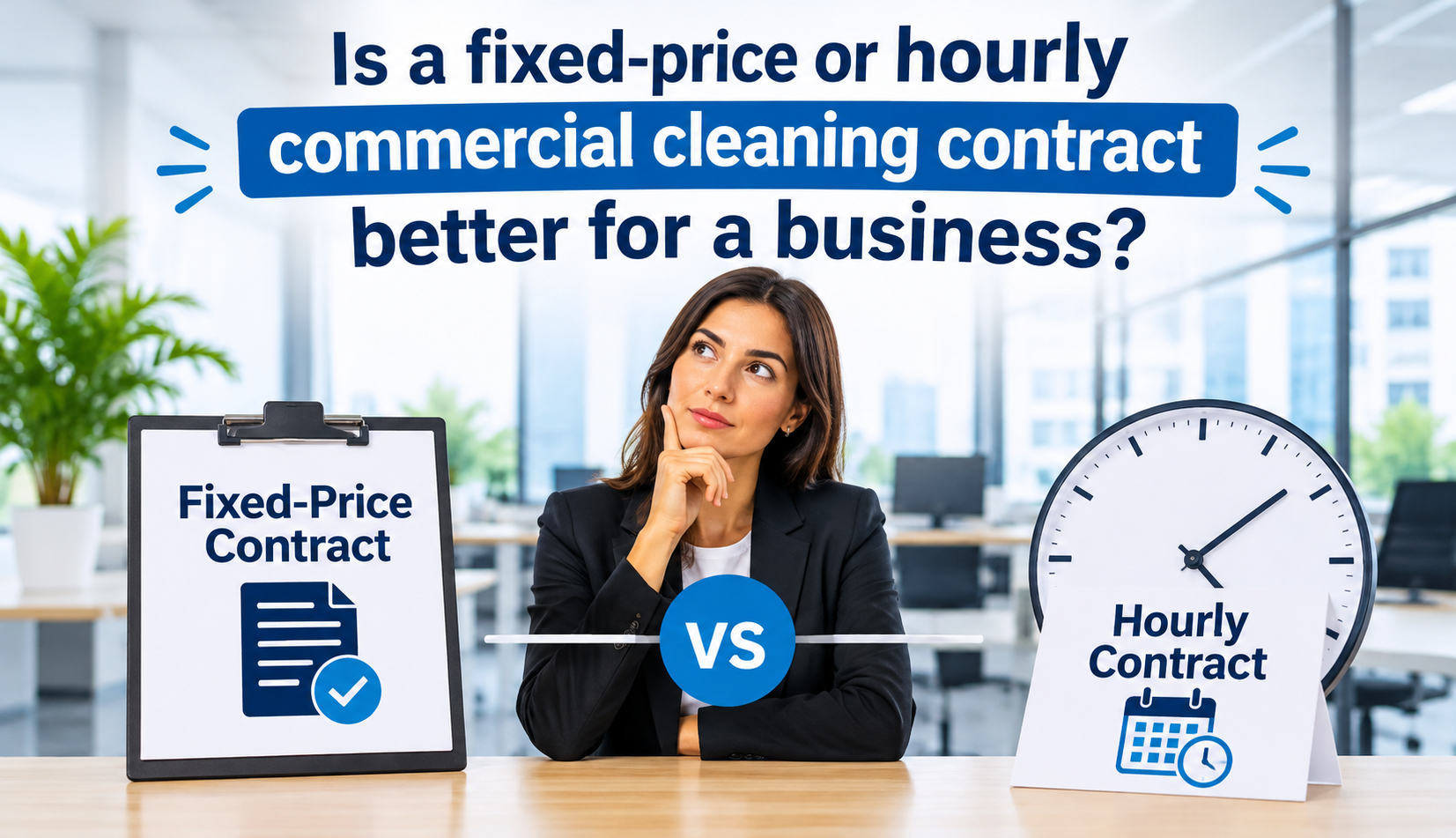
Choosing the right commercial cleaning contract is an important decision for any business. A clean workplace creates a positive impression, supports employee wellbeing and helps maintain a professional environment. However, businesses also need to manage their cleaning budgets and receive good value for money.
When choosing a cleaning service, businesses often compare two pricing options: fixed-price contracts and hourly contracts. Both have advantages, but the right choice depends on your workplace size, cleaning requirements, operating hours and budget.
Understanding commercial cleaning rates Melbourne businesses may encounter can also help you compare service providers and avoid unexpected expenses.
In this blog, we explain how both contract types work, their benefits and disadvantages, and how to choose the right option for your business.
What Is a Fixed-Price Commercial Cleaning Contract?
A fixed-price commercial cleaning contract is an agreement where a cleaning company charges an agreed amount for specific services. Your business pays the same contracted fee weekly, monthly or annually.
The cleaning provider usually calculates the price after reviewing your workplace, cleaning schedule and requirements.
For example, an office may pay a fixed monthly amount for regular vacuuming, mopping, bathroom cleaning, rubbish removal and surface cleaning.
Benefits of a Fixed-Price Contract
- Easier Budget Planning
A fixed-price contract makes budgeting easier because your business knows how much it needs to spend on cleaning each month. This helps you manage operating expenses without worrying about changing hourly charges.
- Consistent Cleaning Services
The agreement usually includes a specific cleaning schedule and list of tasks. This helps ensure that cleaners complete the required work regularly.
- Better Cost Control
Businesses that need regular cleaning can benefit from predictable expenses. You can plan your cleaning budget with greater confidence.
Possible Disadvantages
A fixed-price contract may not suit every business.
- You may pay the agreed amount even when you need less cleaning.
- Additional cleaning tasks may increase the contract price.
- Changes to workplace size or cleaning frequency may require a contract review.
- Unclear service agreements can lead to misunderstandings.
Always check which services are included and whether additional work attracts extra charges.
What Is an Hourly Commercial Cleaning Contract?
An hourly commercial cleaning contract charges your business according to the time cleaners spend completing the agreed tasks.
For example, if a cleaning company charges $45 per hour and a cleaner works for three hours, your business pays $135 for that visit, before any applicable additional charges.
The final cost depends on the hourly rate, number of cleaners and total working hours.
When comparing commercial cleaning rates Melbourne, check whether the hourly quote includes cleaning products, equipment and other service-related expenses.
Benefits of an Hourly Contract
- Greater Flexibility
Hourly cleaning works well for businesses with changing cleaning requirements. You can adjust the number of cleaning hours according to your needs.
- Pay for the Time Required
You pay according to the agreed working hours. This can suit businesses that do not need daily cleaning or have occasional cleaning requirements.
- Suitable for One-Off Jobs
Hourly arrangements are useful for occasional cleaning tasks, such as post-event cleaning, additional office cleaning and temporary cleaning support.
Possible Disadvantages
Hourly cleaning also has a few limitations.
- Monthly cleaning expenses may change.
- Additional tasks can increase the final bill.
- Longer cleaning times may increase costs.
- Budget planning can become difficult when cleaning hours change frequently.
Before signing an agreement, confirm the hourly rate, expected working hours and process for approving additional work.
Which Commercial Cleaning Contract Is Better for Your Business?
There is no single option that works for every business. Your choice should depend on how often you need cleaning and whether your requirements remain consistent.
1. Offices and Corporate Workplaces
Offices usually need regular cleaning to maintain a professional environment. Reception areas, meeting rooms, kitchens, bathrooms and workstations require attention throughout the week.
A fixed-price contract is generally a practical choice because cleaning requirements often remain consistent. It also helps office managers plan monthly expenses.
2. Retail Shops and Shopping Centres
Retail businesses experience different levels of customer traffic throughout the day. Entryways, floors, display areas and customer facilities may need frequent cleaning.
A fixed-price agreement works well for regular cleaning. However, hourly cleaning may be more suitable during seasonal sales, promotional events or busy periods.
3. Warehouses and Industrial Facilities
Warehouses have large floor areas, storage sections and high-traffic spaces. Their cleaning needs may change depending on deliveries and daily operations.
A fixed-price contract can cover routine cleaning, while hourly services can support occasional intensive cleaning requirements.
4. Medical Centres and Healthcare Facilities
Medical centres require careful cleaning to maintain appropriate hygiene standards. Waiting rooms, treatment spaces, reception areas and shared facilities need regular attention.
A fixed-price agreement can help maintain a consistent cleaning schedule. Make sure the contract clearly explains the required cleaning procedures and standards.
5. Small Businesses and Start-ups
Small businesses often work with limited budgets and changing requirements.
Hourly cleaning may be a suitable starting option if your business needs occasional support. Once your cleaning requirements become regular, a fixed-price contract may offer better budget control.
7 Factors to Consider Before Choosing a Cleaning Contract
Before signing a commercial cleaning agreement, consider these important factors.
1. Workplace Size
The size of your premises affects the time, equipment and labour required. A small office has different cleaning needs from a large warehouse.
2. Cleaning Frequency
Decide whether your business needs daily, weekly or occasional cleaning. Regular cleaning requirements often work better with fixed-price contracts.
3. Monthly Budget
Set a realistic cleaning budget and compare the total expected costs of both pricing options.
4. Cleaning Tasks
Prepare a list of areas that need attention, including bathrooms, kitchens, floors, windows and workstations. This helps providers prepare accurate quotes.
5. Additional Charges
Ask whether specialised services such as carpet cleaning, window cleaning and deep cleaning attract extra fees.
6. Service Quality
Do not choose a cleaning company based on price alone. Check its experience, staff training, insurance and quality control processes.
7. Contract Flexibility
Read the agreement carefully. Check payment terms, cancellation policies, notice periods and the process for changing cleaning requirements.
How Can You Get Better Value from Commercial Cleaning Services?
Choosing the right contract is only one part of managing cleaning expenses. Follow these simple steps to get better value from your cleaning provider.
- Prepare a cleaning checklist: Identify the areas that need regular attention.
- Choose the right frequency: Avoid paying for unnecessary cleaning visits.
- Compare detailed quotes: Check whether providers offer similar services and inclusions.
- Review cleaning performance: Make sure the agreed tasks are completed properly.
- Communicate changes: Inform your cleaning provider when your workplace requirements change.
When comparing commercial cleaning rates Melbourne, always consider service quality, cleaning frequency and included tasks alongside the price.
Final Thoughts
Both fixed-price and hourly commercial cleaning contracts have their advantages. A fixed-price contract generally suits businesses that need regular cleaning and predictable monthly expenses. On the other hand, hourly cleaning offers greater flexibility for one-off jobs and changing cleaning requirements.
The best choice depends on your workplace needs, cleaning schedule and available budget. Compare your options carefully and choose an agreement that supports your business without creating unnecessary expenses.
At Highview Commercial Cleaning, we understand that every workplace has different cleaning requirements. Our professional team provides reliable commercial cleaning solutions designed around your business needs. Whether you manage an office, retail space or commercial property, we can help you maintain a clean and welcoming environment.
Looking for reliable commercial cleaning Melbourne services? Contact Highview Commercial Cleaning today to discuss your requirements and request a tailored cleaning quote.