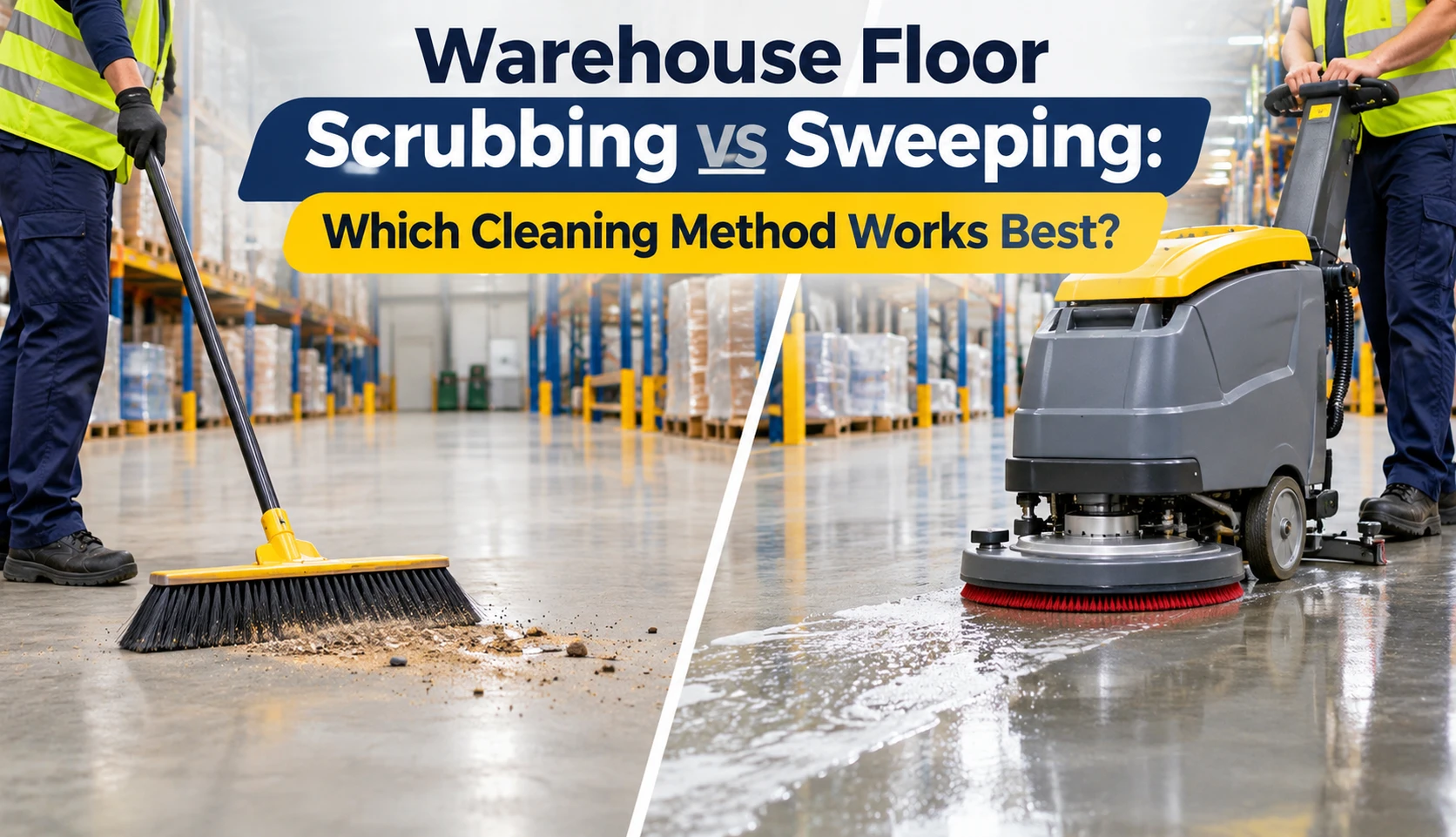
Keeping a warehouse clean is essential for maintaining a safe, organised and productive workplace. With forklifts moving throughout the day, employees handling stock and delivery vehicles entering regularly, warehouse floors can quickly collect dust, dirt, grease and debris.
Two of the most common cleaning methods are sweeping and warehouse floor scrubbing. While both methods help maintain cleanliness, they serve different purposes and deliver different results.
Understanding how each method works can help you choose the right cleaning routine, reduce workplace safety risks and maintain your warehouse flooring for longer.
What Is Warehouse Floor Sweeping?
Warehouse floor sweeping is a cleaning method that removes loose dirt, dust, packaging materials and other dry debris from floor surfaces. Cleaning professionals use manual brooms or industrial sweeping machines, depending on the size of the facility.
Industrial sweepers are particularly useful for large warehouses that experience regular foot traffic and stock movement. They help collect loose waste before it spreads across different working areas.
Benefits of Warehouse Floor Sweeping
- Removes loose dust and debris.
- Covers large floor areas quickly.
- Requires little or no water.
- Supports everyday warehouse maintenance.
- Reduces the accumulation of dry waste.
- Causes minimal disruption to daily operations.
Sweeping is suitable for routine cleaning, but it may not effectively remove stubborn stains, grease or dirt that sticks to the floor.
What Is Warehouse Floor Scrubbing?
Warehouse floor scrubbing is a deeper cleaning method that uses specialised equipment, water, suitable cleaning solutions and rotating brushes to remove stubborn dirt from hard floor surfaces.
Industrial floor scrubbers loosen dirt and collect dirty water through an integrated recovery system. This process removes contaminants that regular sweeping may miss.
Floor scrubbing is particularly useful for warehouses, distribution centres, manufacturing facilities and industrial storage spaces that require a more thorough cleaning approach.
Benefits of Floor Scrubbing
- Removes stubborn dirt, grease and grime.
- Helps reduce slip hazards.
- Improves the overall appearance of warehouse floors.
- Removes accumulated dirt from high-traffic areas.
- Supports better workplace hygiene.
- Helps maintain flooring when appropriate equipment and cleaning products are used.
Warehouse Floor Scrubbing vs Sweeping: Key Differences
Although both cleaning methods serve an important purpose, understanding their differences helps businesses make better cleaning decisions.
Cleaning Effectiveness
Sweeping removes loose dust, dirt and packaging waste from floor surfaces. However, scrubbing delivers a deeper clean by removing stubborn stains, greasy residue and accumulated grime.
Water and Cleaning Products
Sweeping generally does not require water or cleaning solutions. Scrubbing uses water and suitable cleaning products to loosen and remove surface contamination.
Cleaning Time
Sweeping is generally a quicker option for everyday cleaning. Scrubbing may require additional time, depending on the size of the warehouse, floor conditions and drying requirements.
Cleaning Frequency
Most busy warehouses benefit from daily sweeping. Scrubbing frequency depends on foot traffic, machinery movement and the amount of dirt that accumulates.
When Should You Choose Warehouse Floor Sweeping?
Not every warehouse needs intensive cleaning every day. Sweeping provides an effective solution when the main concern is loose dirt and dry waste.
Daily Dust and Debris Removal
Warehouses often collect cardboard pieces, packaging materials and dust during normal operations. Regular sweeping helps prevent these materials from building up and keeps working areas organised.
Large Storage Areas
Industrial sweeping machines can cover extensive floor areas efficiently. This makes them suitable for warehouses with wide aisles, storage sections and distribution areas.
Areas That Need to Remain Dry
Some warehouse environments require minimal moisture because of sensitive stock, equipment or operational requirements. Dry sweeping provides a practical cleaning option in these areas.
Businesses should also use suitable dust-control equipment when dealing with fine dust.
When Should You Choose Warehouse Floor Scrubbing?
Sweeping alone may not provide the desired results when warehouse floors develop stubborn marks, greasy patches or accumulated grime.
Professional warehouse floor scrubbing provides a deeper cleaning solution for these conditions.
High-Traffic Warehouse Areas
Loading bays, forklift routes and packing stations experience constant movement. Over time, dirt can become embedded in floor surfaces.
Regular scrubbing helps remove this build-up and maintain cleaner working areas.
Oil and Grease Build-Up
Machinery and industrial equipment can leave oily residue on warehouse floors. These contaminants may create slippery surfaces and increase workplace safety risks.
Appropriate scrubbing equipment and cleaning solutions help remove everyday greasy residue. Significant spills require suitable spill management procedures.
Stubborn Floor Marks
Tyre marks, shoe marks and general surface stains can make warehouse floors look poorly maintained. Scrubbing can help remove many of these marks and improve the overall appearance of the facility.
Why Combining Sweeping and Scrubbing Works Best
Choosing one cleaning method over the other may not always deliver the best results. Many warehouses benefit from combining both methods into a structured cleaning routine.
Sweeping removes loose materials before deep cleaning begins. This helps prevent debris from interfering with scrubbing equipment.
Following sweeping with warehouse floor scrubbing helps remove remaining surface contamination and provides a more thorough finish.
Daily Cleaning
Sweep operational areas, remove loose waste and keep pedestrian pathways clear throughout the working day.
Weekly Cleaning
Scrub high-traffic areas, loading bays and heavily soiled surfaces according to their cleaning requirements.
Monthly Cleaning
Review the overall condition of warehouse floors and arrange more extensive cleaning where necessary.
Every warehouse has different cleaning requirements. Businesses should adjust their cleaning schedules based on traffic levels, flooring materials and operational activities.
How Clean Warehouse Floors Improve Workplace Safety
Warehouse floors play an important role in maintaining a safe working environment. Dust, loose debris and greasy surfaces can create unnecessary hazards for employees and visitors.
A consistent cleaning routine helps keep walkways clear, improves the visibility of floor safety markings and reduces the accumulation of slippery contaminants.
Regular warehouse floor scrubbing can also help maintain loading areas, forklift routes and pedestrian pathways.
Cleaning teams should use appropriate warning signs, manage wet areas and allow floors to dry before reopening them to traffic.
Factors to Consider When Choosing a Warehouse Cleaning Method
Before selecting a cleaning method, consider the specific requirements of your warehouse.
Floor Material
Concrete, epoxy-coated flooring and sealed industrial surfaces have different cleaning requirements. Unsuitable brushes or harsh chemicals may damage certain floor finishes.
Warehouse Size
Larger facilities may benefit from ride-on cleaning machines, while smaller warehouses may require compact walk-behind equipment.
Type of Dirt and Contamination
Loose dust and packaging waste generally require sweeping. Grease, stubborn stains and accumulated grime often require deeper cleaning.
Operational Hours
Schedule cleaning during quieter periods whenever possible. This helps reduce disruptions and allows cleaning teams to work safely around warehouse equipment and stock.
Why Professional Warehouse Cleaning Makes a Difference
Professional cleaning teams use suitable industrial equipment and cleaning techniques to address different warehouse conditions.
They can assess floor materials, identify heavily soiled areas and develop cleaning routines that suit your operational requirements.
Professional warehouse floor scrubbing can help businesses maintain consistent cleaning standards without placing additional cleaning responsibilities on warehouse employees.
Regular professional cleaning also helps prevent excessive dirt accumulation, maintain floor appearance and create a more organised working environment.
Final Thoughts
Both sweeping and scrubbing are valuable methods for maintaining warehouse floors. Sweeping works well for everyday dust and debris removal, while scrubbing provides a deeper clean for stubborn dirt, grease and surface marks.
The best approach often involves combining both methods according to your warehouse’s cleaning needs.
At Highview Commercial Cleaning, we understand the importance of maintaining clean, safe and organised industrial environments. A well-planned cleaning routine can help protect your flooring, support workplace safety and keep your warehouse looking professional.
Looking for dependable warehouse floor cleaning Melbourne services? Contact Highview Commercial Cleaning today to arrange a professional cleaning solution tailored to your warehouse, operational schedule and business requirements.