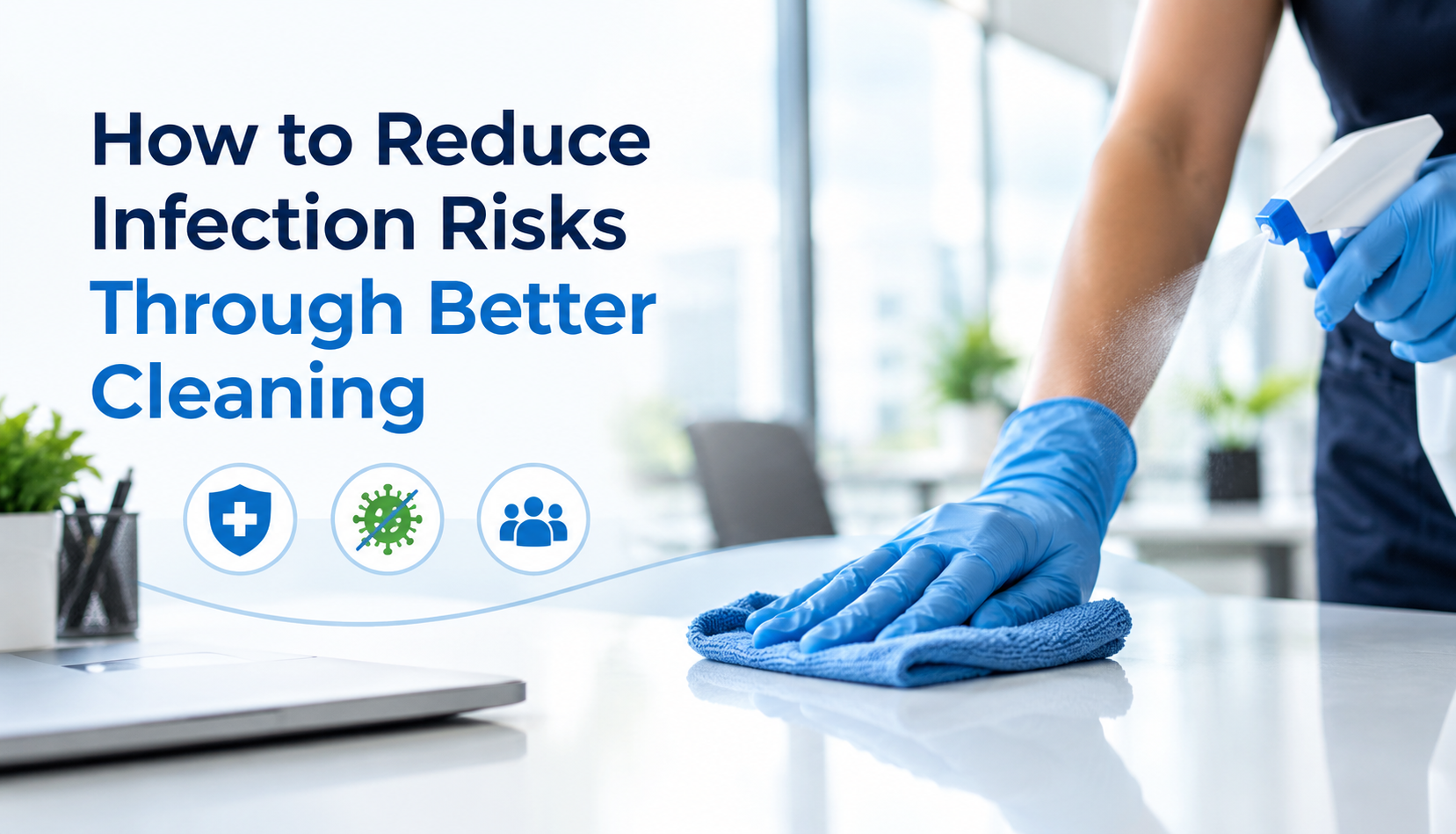
Keeping healthcare environments clean is essential for protecting patients, staff and visitors. Hospitals, medical centres, dental clinics and other healthcare facilities welcome people with different health needs every day. Without proper cleaning practices, germs can spread through frequently touched surfaces, shared equipment and contaminated areas.
Good healthcare hygiene helps reduce these risks and supports a safer environment for everyone. It involves more than removing visible dirt. Healthcare facilities need suitable cleaning procedures, appropriate disinfectants and trained staff who understand how to clean different areas correctly.
Whether you manage a medical clinic or a healthcare facility, improving your cleaning routine can make a meaningful difference to everyday hygiene.
In this guide, we explain practical ways to reduce infection risks through better cleaning and why professional cleaning support can help healthcare facilities maintain appropriate standards.
Why Is Healthcare Cleaning So Important?
Healthcare environments can contain bacteria, viruses and other microorganisms that may contribute to infections. Some can remain on surfaces for a period of time, depending on the organism, surface and surrounding conditions.
Patients may also have weakened immune systems, making infection prevention particularly important.
Protect Patients, Staff and Visitors
Patients visit healthcare facilities to receive treatment and support. Staff members also move between rooms, handle equipment and interact with many people throughout the day.
Regular cleaning helps remove dirt and contaminants from surfaces. When staff combine cleaning with appropriate disinfection and hand hygiene, they can help reduce opportunities for germs to spread.
Maintain a Clean and Professional Environment
A clean healthcare facility also helps patients feel more comfortable when they arrive for an appointment.
Clean waiting rooms, tidy reception areas and well-maintained treatment rooms create a positive impression. More importantly, consistent cleaning supports the daily hygiene practices that healthcare facilities need.
Effective healthcare hygiene should form part of a wider infection prevention plan rather than operate as a separate task.
1. Create a Clear Cleaning Schedule
A cleaning schedule helps staff understand which areas need attention, what tasks they must complete and when they should complete them.
Without a clear plan, important surfaces or rooms may receive inconsistent attention.
Identify High-Priority Areas
Start by identifying areas that people use frequently. These may include:
- Reception desks and counters
- Waiting room chairs and tables
- Door handles and light switches
- Treatment beds and examination surfaces
- Toilets and washbasins
- Staff kitchens and break rooms
- Floors in busy walkways
The cleaning frequency should reflect the level of use, contamination risk and requirements of the particular healthcare setting.
Assign Cleaning Responsibilities
Make it clear who is responsible for each cleaning task. Staff should know which tasks they need to complete and which tasks require a trained cleaning professional.
Use a checklist to record completed work and identify missed tasks. Supervisors can review these records and address any gaps.
A consistent schedule makes healthcare hygiene easier to manage and helps facilities maintain reliable cleaning practices throughout the day.
2. Clean High-Touch Surfaces Regularly
High-touch surfaces can collect germs because many people handle them throughout the day.
Examples include door handles, taps, reception counters, shared keyboards and frequently used equipment.
Focus on Frequently Used Surfaces
Identify the surfaces people touch most often in your facility. Clean them according to your risk assessment, workplace procedures and relevant infection prevention guidance.
A busy medical reception area may need more frequent attention than a staff office used by only a few people.
Do not assume that a surface is clean simply because it looks tidy. Microorganisms are often invisible, so staff must follow established cleaning procedures.
Use the Correct Cleaning Products
Different surfaces and materials may require different products. Always follow the product label, including the recommended dilution, application method and contact time.
If a disinfectant needs to remain wet on a surface for a specified period, wiping it off too early may reduce its effectiveness.
Good healthcare hygiene depends on using suitable products correctly, not simply spraying and wiping surfaces as quickly as possible.
3. Understand the Difference Between Cleaning and Disinfection
Cleaning and disinfection serve different purposes. Healthcare facilities need to understand when to use each process.
What Does Cleaning Do?
Cleaning removes dirt, dust, organic matter and many germs from surfaces. Staff usually use water, detergent and suitable cleaning equipment.
Cleaning is an important first step because dirt and organic material can interfere with some disinfectants.
When Is Disinfection Needed?
Disinfection uses suitable chemical products to inactivate many harmful microorganisms on surfaces. The product must be appropriate for the intended use and the organisms the facility needs to control.
In healthcare settings, staff should follow infection prevention procedures to determine when cleaning alone is sufficient and when disinfection is required.
Never mix cleaning chemicals unless the product instructions explicitly permit it. Mixing products can produce dangerous fumes or other harmful reactions.
A well-planned cleaning process supports healthcare hygiene by helping staff choose the right method for each surface and situation.
4. Train Staff in Safe Cleaning Practices
Even good cleaning products cannot deliver the intended results if staff use them incorrectly.
Training helps employees understand the right procedures, use equipment safely and recognise areas that need extra attention.
Teach Correct Cleaning Techniques
Staff should understand how to:
- Follow the correct cleaning sequence.
- Use cleaning products according to their labels.
- Avoid spreading contamination between rooms.
- Handle and dispose of waste correctly.
- Clean and store equipment safely.
- Use appropriate personal protective equipment when required.
Facilities should also explain the difference between routine cleaning and procedures for areas affected by spills or other contamination.
Support Regular Refresher Training
Cleaning procedures and workplace requirements can change. Refresher training helps staff maintain their knowledge and follow current procedures.
Supervisors should observe cleaning practices, provide feedback and correct problems promptly.
When everyone understands their responsibilities, a healthcare facility can maintain more consistent hygiene standards.
5. Prevent Cross-Contamination Between Areas
Cross-contamination occurs when germs transfer from one surface, object or area to another.
For example, using the same cleaning cloth on a toilet and a treatment room without the correct cleaning and disinfection process can spread contamination.
Use Suitable Cleaning Equipment
Use designated cloths, mops and other equipment for different areas, following the facility’s cleaning procedures. Colour-coded systems can help staff distinguish between equipment used in toilets, clinical rooms and general areas.
However, colour coding only works when staff understand and follow the system.
Clean and disinfect reusable equipment as required, and replace disposable materials after use when the procedure calls for it.
Follow a Logical Cleaning Order
Staff should follow a consistent cleaning sequence that reduces the risk of transferring contamination from dirtier areas to cleaner ones.
They should also change gloves and other protective equipment as required by the task and relevant infection prevention procedures.
Preventing cross-contamination is a key part of effective healthcare hygiene, particularly in facilities where staff move between different treatment and support areas.
6. Maintain Clean Toilets and Handwashing Facilities
Toilets and handwashing areas require regular attention because people use them throughout the day.
Poorly maintained facilities can affect comfort and create additional hygiene concerns.
Clean Toilets and Washbasins Properly
Follow a suitable schedule for cleaning toilet seats, flush buttons, taps, basins, door handles and other frequently touched surfaces.
Use the correct products and equipment for these areas. Keep toilet cleaning equipment separate from equipment used in treatment rooms or food preparation areas.
Keep Handwashing Supplies Available
Check that handwashing facilities have adequate soap and suitable hand-drying supplies.
Healthcare workers should follow the hand hygiene procedures that apply to their roles. Patients and visitors should also have access to suitable handwashing facilities where appropriate.
Cleaning alone cannot prevent every infection. Combining proper cleaning with hand hygiene and other infection prevention measures provides a more complete approach.
7. Manage Waste and Spills Correctly
Healthcare facilities may generate general waste, clinical waste and other materials that require specific handling.
Staff must follow the facility’s procedures and applicable requirements when separating, collecting and disposing of waste.
Use the Correct Waste Containers
Provide clearly identified containers in suitable locations. Train staff to place different types of waste in the correct containers and avoid overfilling them.
Clinical waste should be handled according to the relevant Australian requirements and the facility’s infection prevention procedures.
Respond to Spills Promptly
Blood and other potentially infectious materials require specific spill management procedures.
Only trained staff with the appropriate protective equipment should manage these spills. They must use the approved products and follow the required steps for cleaning, disinfection and disposal.
Never treat every spill as an ordinary cleaning task. Follow the procedures established for your healthcare setting.
8. Review Cleaning Quality Regularly
A cleaning schedule is only useful when staff follow it properly.
Regular checks help healthcare managers identify missed tasks, inconsistent practices and areas that need improvement.
Use Checklists and Inspections
Supervisors can inspect selected areas and review cleaning records to check whether staff have completed the required tasks.
They should record problems, assign corrective actions and confirm that the team has addressed them.
Encourage Staff to Report Concerns
Staff should feel comfortable reporting missed cleaning, damaged equipment, empty soap dispensers or other hygiene concerns.
Acting on feedback helps facilities resolve issues before they become recurring problems.
Reviewing cleaning quality also supports accountability and helps maintain consistent healthcare hygiene across the workplace.
9. Consider Professional Healthcare Cleaning Services
Healthcare facilities often have different cleaning needs from ordinary commercial premises. Treatment rooms, patient waiting areas, washrooms and shared equipment may require specific procedures.
Professional cleaning support can help facilities organise routine tasks and maintain a consistent approach.
Choose a Provider That Understands Healthcare Settings
Before hiring a cleaning company, ask about its experience with medical environments, staff training, cleaning procedures and quality checks.
Find out how the provider manages cleaning products, equipment, access arrangements and communication with your team.
The provider should understand that different areas may have different cleaning requirements. It should also be willing to work within your facility’s infection prevention procedures.
Establish Clear Expectations
Agree on the areas to be cleaned, the frequency of service and the tasks included in the contract.
Discuss how the team should report problems and respond when your facility needs additional cleaning.
Professional support can complement your existing infection prevention programme, but it should not replace the responsibilities of healthcare staff or clinical infection control professionals.
Final Thoughts
Reducing infection risks requires a consistent approach to cleaning, disinfection, hand hygiene and staff training. Healthcare facilities should identify high-priority areas, use appropriate products, prevent cross-contamination and review cleaning quality regularly.
Every team member has a role to play in maintaining a clean and safe environment. Clear procedures and reliable cleaning support can help healthcare facilities manage everyday hygiene more effectively.
Highview Commercial Cleaning can be a starting point for exploring professional cleaning support for medical and commercial environments in Melbourne. When assessing a provider, consider its experience, cleaning methods, staff training and ability to work within your facility’s requirements.
Support Better Healthcare Hygiene With Professional Cleaning
Maintaining a clean medical environment takes time, planning and consistent attention to detail. Professional medical cleaning services melbourne healthcare facilities can explore may help keep reception areas, waiting rooms, treatment spaces and shared facilities clean and well maintained.
Contact Highview Commercial Cleaning to discuss your facility’s cleaning needs, preferred schedule and service requirements. A suitable cleaning plan can help your team maintain a professional environment and support your wider infection prevention practices.
Take the next step towards a cleaner, more welcoming healthcare facility with a cleaning approach designed around your needs.