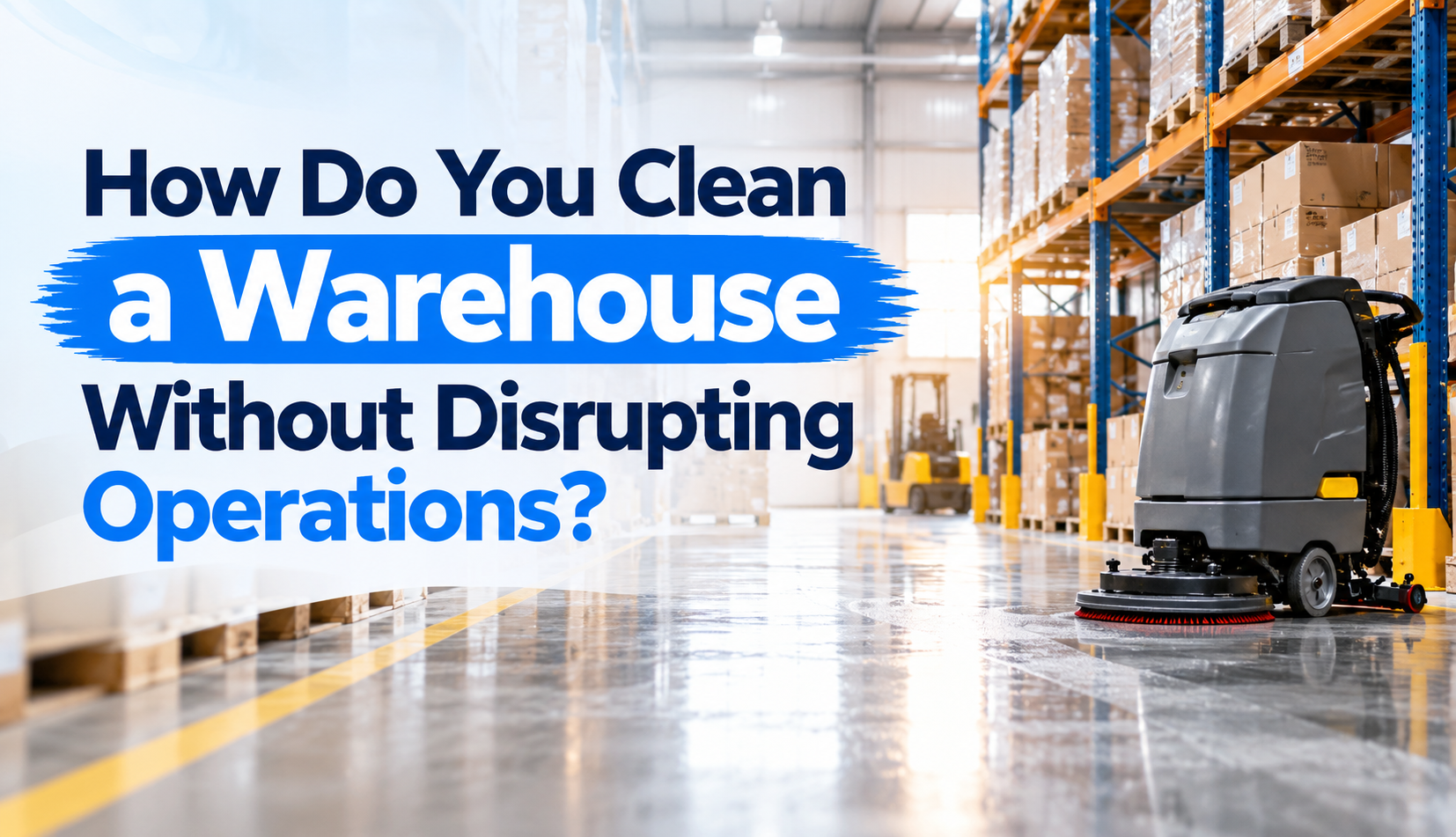
Warehouse cleaning plays an important role in keeping a workplace safe, organised and productive. However, cleaning a busy warehouse can be challenging when staff, forklifts, deliveries and stock movements continue throughout the day.
The key is to plan the cleaning work around daily operations rather than stopping everything at once. With the right schedule, equipment and cleaning methods, businesses can maintain a clean facility while keeping normal activities running.
A practical approach to minimising disruption during warehouse cleaning starts with understanding how the warehouse operates and choosing cleaning times and methods that fit the workflow.
Why Warehouse Cleaning Should Not Be Ignored
Warehouses deal with constant movement. Employees move products, forklifts transport pallets, and deliveries arrive and leave throughout the day. Dust, dirt, packaging waste and spills can quickly build up in these conditions.
A clean warehouse can help:
- Reduce slip and trip hazards
- Keep walkways and work areas clear
- Improve workplace hygiene
- Protect stored products
- Support safer forklift movement
- Create a more organised working environment
- Maintain a professional workplace
Regular cleaning also makes it easier to identify problems such as damaged flooring, leaks, blocked access areas or poorly stored materials.
Plan the Cleaning Around Warehouse Operations
The first step towards minimising disruption during warehouse cleaning is creating a cleaning plan that matches the warehouse’s operating hours.
Before cleaning starts, identify the busiest areas and the busiest times of the day. Some sections may have continuous activity, while others may be quieter during certain periods.
Identify High-Traffic Areas
Mark areas such as:
- Loading docks
- Forklift routes
- Picking areas
- Packing stations
- Staff walkways
- Storage aisles
- Entry and exit points
These areas may need more frequent cleaning, but they should be cleaned when traffic is lower.
Choose Suitable Cleaning Times
If the warehouse operates 24 hours a day, cleaning can be divided into smaller sections. Instead of cleaning the entire facility at once, cleaners can work through different zones during quieter periods.
This approach helps with minimising disruption during warehouse cleaning while still maintaining consistent cleaning standards.
Divide the Warehouse Into Cleaning Zones
Cleaning a large warehouse in one go can create unnecessary delays. A better option is to divide the facility into manageable zones.
For example, a warehouse could be divided into:
- Receiving area
- Storage aisles
- Packing area
- Dispatch area
- Staff areas
- Office and amenities
Clean One Section at a Time
When cleaners focus on one section at a time, other parts of the warehouse can continue operating.
The cleaned area can also be temporarily marked with signs or barriers. Once the floor is safe and dry, normal operations can resume in that section.
This simple system is particularly useful for minimising disruption during warehouse cleaning in busy Australian warehouses.
Use the Right Cleaning Equipment
The right equipment can make warehouse cleaning faster and safer.
Depending on the size and condition of the warehouse, professional cleaners may use:
- Industrial vacuum cleaners
- Floor scrubbers
- Sweepers
- Pressure cleaning equipment
- Microfibre cleaning systems
- Spill response equipment
- Suitable floor cleaning chemicals
Large floor areas can take a long time to clean manually. Mechanical cleaning equipment can cover larger spaces more efficiently and reduce the amount of time an area needs to remain closed.
Keep Forklifts and Pedestrians Safe
Safety should always come before speed.
Cleaning activities should not interfere with forklift routes or pedestrian walkways. Cleaners should communicate with warehouse supervisors before working in active areas.
Use Clear Safety Signs
Place visible signs around wet floors, cleaning equipment and temporary work areas.
For larger cleaning jobs, temporary barriers may also be useful. Employees should know which areas are being cleaned and which routes they should use instead.
Avoid Blocking Important Routes
Where possible, cleaners should avoid placing equipment, hoses or cleaning supplies in active forklift paths.
Good communication between cleaners and warehouse staff makes minimising disruption during warehouse cleaning much easier.
Deal With Spills Quickly
Spills should never be left until the next scheduled cleaning session.
Oil, water, chemicals and other liquids can create serious slip hazards. They may also damage certain flooring or affect stored products.
A simple spill response process should include:
- Identify the spill.
- Keep people away from the affected area.
- Use appropriate spill control materials.
- Clean the affected surface.
- Make sure the area is dry and safe.
- Remove warning signs only when the area is ready for use.
Quick spill response protects employees and helps warehouse operations continue safely.
Clean During Low-Activity Periods
One of the easiest ways of minimising disruption during warehouse cleaning is to schedule major cleaning tasks during quieter periods.
For some Australian businesses, this may mean cleaning:
- Before the morning shift
- After the evening shift
- During scheduled breaks
- During quieter delivery periods
- On weekends
- During planned maintenance periods
The best time will depend on the warehouse’s operating schedule.
Use a Regular Cleaning Schedule
Waiting until a warehouse becomes very dirty can make cleaning slower and more disruptive.
A regular cleaning schedule spreads the work across the week or month. Daily tasks can include rubbish removal, spot cleaning and basic sweeping, while deeper cleaning can happen weekly or monthly.
Example Warehouse Cleaning Schedule
Daily:
- Remove rubbish
- Clean visible spills
- Sweep high-traffic areas
- Clean staff amenities
- Check walkways
Weekly:
- Machine clean warehouse floors
- Clean corners and hard-to-reach areas
- Remove built-up dirt
- Clean loading and dispatch areas
Monthly or as required:
- Deep clean floors
- Clean walls and high-level areas
- Review difficult-to-clean areas
- Check the overall cleaning standard
A structured schedule supports minimising disruption during warehouse cleaning because cleaning tasks become predictable rather than unexpected.
Communicate With Staff Before Cleaning
Good communication can prevent many problems.
Warehouse managers should let employees know when cleaning will take place and which areas may be temporarily restricted.
Cleaners should also understand:
- Warehouse traffic patterns
- Forklift routes
- Emergency exits
- Restricted areas
- Storage requirements
- Workplace safety procedures
When everyone understands the cleaning plan, the work can happen with fewer interruptions.
Choose Professional Warehouse Cleaning Services
Professional commercial cleaners understand that warehouses cannot simply stop operating whenever cleaning is required.
An experienced cleaning team can develop a cleaning routine around the warehouse’s working hours. They can also recommend suitable equipment and cleaning methods for different surfaces.
This is especially useful for large facilities where cleaning needs to happen regularly without affecting productivity.
Professional cleaners can also help businesses maintain consistent cleaning standards instead of relying on occasional deep cleans.
Common Mistakes That Can Disrupt Warehouse Operations
Some cleaning practices can create unnecessary problems.
Cleaning During Peak Activity
Cleaning busy areas while deliveries, forklifts and staff are moving constantly can slow down operations and create safety risks.
Using Too Much Water
Excess water can increase drying time and make floors unsafe. Appropriate equipment and cleaning methods can reduce this problem.
Ignoring Communication
If employees do not know that an area is being cleaned, they may accidentally enter a restricted area or interrupt the cleaning process.
Cleaning Everything at Once
Closing a large part of the warehouse at one time can have a bigger impact on productivity than necessary. Zone-based cleaning is usually easier to manage.
Avoiding these mistakes makes minimising disruption during warehouse cleaning a more realistic and practical goal.
How Can Businesses Make Warehouse Cleaning Easier?
Warehouse cleaning does not need to become a major interruption to everyday business.
Start by understanding the warehouse’s daily workflow. Then create a cleaning schedule around quieter periods, divide the facility into zones and use suitable commercial cleaning equipment.
It is also important to keep communication open between warehouse managers, employees and cleaning teams.
Small, regular cleaning tasks can prevent dirt and waste from building up. This reduces the need for long cleaning shutdowns and supports minimising disruption during warehouse cleaning over the long term.
Final Thoughts
A clean warehouse supports a safer and more organised workplace, but cleaning should not unnecessarily slow down daily operations. With proper scheduling, zone-based cleaning, suitable equipment and good communication, businesses can keep their facilities clean while continuing to serve customers and manage stock.
For Australian businesses, working with an experienced commercial cleaning team can make the process even easier. Highview Commercial Cleaning can help businesses maintain a practical cleaning routine that fits around their warehouse operations.
Need Professional Warehouse Cleaning in Melbourne?
If your warehouse needs reliable cleaning without unnecessary interruptions, professional support can make the process easier. Highview Commercial Cleaning can help with scheduled cleaning, floor care and other commercial cleaning requirements.
For businesses looking for warehouse floor cleaning Melbourne, a planned cleaning service can help maintain clean, safe and presentable warehouse floors while keeping daily operations moving.